


PVC Pipe Load Guide
Use our horizontal pipe deflection load chart below to find how much weight your PVC pipe structure can hold. This will help you choose the right pipe size and length for your design.
Important Note: The values below are conservative estimates based on FORMUFIT's internal load testing, and reflect only the horizontal loads of Furniture Grade PVC pipe.
What is pipe deflection?
Pipe deflection is how much a horizontal pipe bends, either under its own weight or under an added load. There are two types to understand before you design your structure:
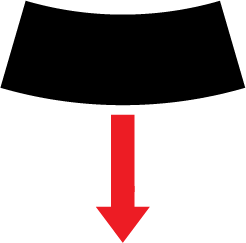
Self Deflection
This happens when certain sizes of pipe bend under their own weight alone, with no load added. Smaller pipe sizes are prone to this at longer lengths, while larger sizes generally are not. At the sizes and lengths where this occurs, the pipe isn't strong enough to carry any additional weight on top of itself.
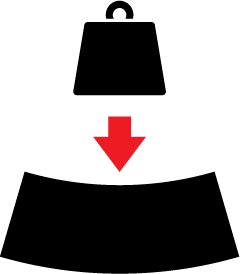
Load Deflection
This is the bending of a horizontal pipe when external weight is applied. A pipe size and length in this category won't bend under its own weight, making it ideal for weight-bearing structures where people or items will be placed on it.
How to Use the Load Deflection Chart
- Determine the PVC size you want to use for your structure.
- Sketch out your design and note the pipe lengths you'll need.
- Find each length in the chart below to see whether it's Self Deflecting (SD) or Load Deflecting (LD).
Once you know which type applies:
- Self Deflecting (SD): The number shown is how many inches the center of that pipe segment will sag from fully horizontal, under its own weight alone.
- Load Deflecting (LD): The number shown is the maximum weight in pounds that segment can hold before it begins to bend.
What About Vertical Load on PVC Pipe?
PVC pipe is stronger when standing vertically than lying horizontally. To estimate a vertical load, multiply the horizontal load number from the chart by 2.8.
For example, a 3-foot length of 1-1/4 in. PVC pipe holds 20 lb. horizontally. Standing vertically, that same length holds:
20 lb. x 2.8 = 56 lb. vertical load
Basic Load Guidelines
To estimate the total horizontal load a PVC structure can bear, add up the maximum load of each Load Deflecting segment that will carry weight. This works only when the load is spread evenly across the surface.
This total isn't a hard ceiling on what the structure can support, but it does give you a conservative, reliable estimate to design around.
PVC Pipe Load FAQ
A 1-foot horizontal span of 1/2 inch Schedule 40 PVC pipe can hold up to 18 lb. before deflecting. Load capacity drops significantly as span length increases; by 5 feet, 1/2 inch pipe self-deflects under its own weight rather than bearing additional load.
2 inch PVC pipe can bear a horizontal load up to 9 feet before it begins to self-deflect under its own weight. At a 9-foot span, it can still support approximately 1 lb. of additional load.
Yes. A vertical PVC pipe is stronger than the same pipe used horizontally. Multiply any horizontal load value by 2.8 to estimate the vertical load capacity for the same pipe size and length.
Self deflection is when a pipe bends under its own weight alone, with no added load. Load deflection is when a pipe holds its own weight without bending but bends once external weight is added. FORMUFIT's load chart shows self-deflecting pipe lengths in inches of bend, and load-deflecting pipe lengths in maximum pounds supported.
Ready to Build Your Structure?
Now that you know your pipe's load limits, shop FORMUFIT Furniture Grade PVC Pipe in the size you need.